Volkswagen has officially put the VR6 to bed. After a production run that stretched from 1991 to 2024 and totaled roughly 1.87 million engines, the last VR6 rolled off the line on December 12, 2024. That should feel like the end of a chapter. For Volkswagen enthusiasts, it feels more like the closing of an era that mattered far more than the usual engine retirement.
Because the VR6 was never just another six-cylinder.
It was one of the most unusual production engines of the modern era, born from a packaging problem and turned into one of Volkswagen's most distinctive performance identities. In the late 1980s, VW needed six-cylinder power for cars built around compact transverse engine bays. A traditional 60-degree or 90-degree V6 would have required a larger engine bay — wider meant lengthening existing vehicles to provide enough crumple zone between the front of the car, the engine, and the passenger cell. That was not going to happen. So Volkswagen's engineers built something stranger: a six-cylinder engine with a bank angle of just 15 degrees, tight enough to use a single cylinder head and compact enough to fit where a conventional V6 would not.
"The result was the VR6, from Verkürzt Reihenmotor, or 'shortened inline engine.' It was not quite a V6 and not quite an inline-six. It was its own thing, and that was the whole point."
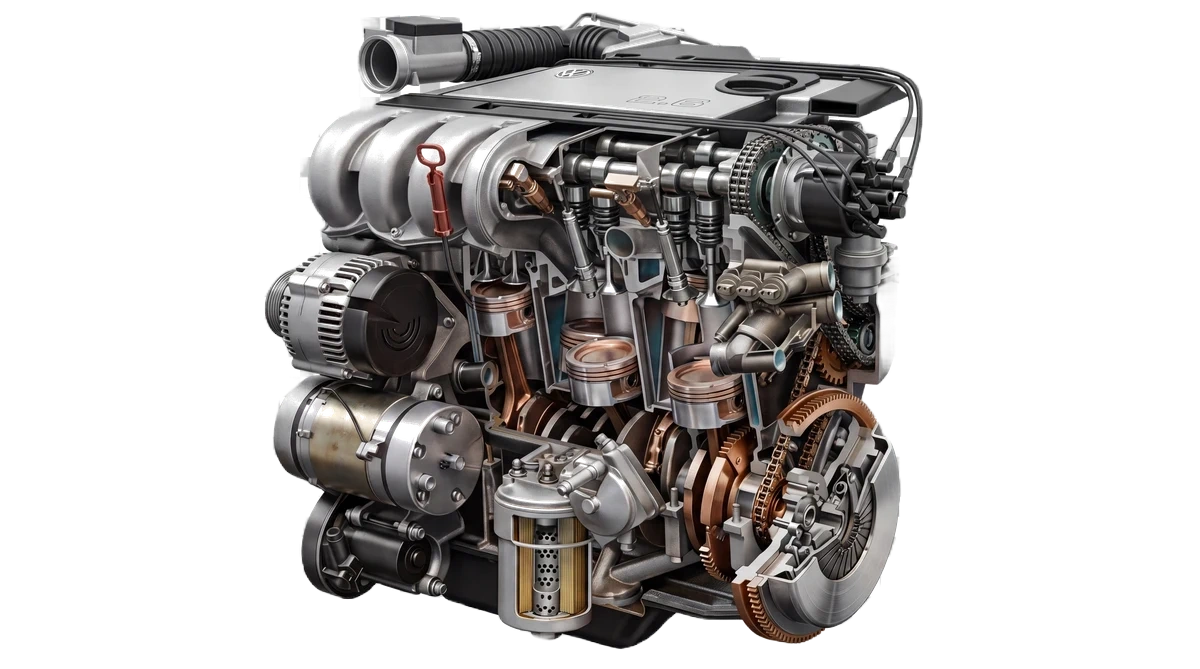
The VR6 internal architecture — staggered cylinder banks, single shared head, seven main bearing crankshaft. Every detail visible.
The concept had roots. Lancia had been building narrow-angle V-engines since the 1920s. VW took that concept and scaled it to six cylinders, turning an Italian curiosity into a mass-production reality. The original engine used a single aluminum cylinder head over two staggered banks of cylinders. The pistons had tilted crowns to match the cylinder bank angles within that shared head. The crankshaft was a drop-forged steel unit running on seven main bearings — far more robust than the four-main-bearing layout many conventional V6s used. Journal offset was 22 degrees, firing intervals were a true 120 degrees, and the firing order was 1-5-3-6-2-4.
That combination gave the engine its famously smooth power delivery and its unmistakable sound — a mechanical howl that never really sounded like any other six-cylinder on the road. Equal-length intake runners, unusual exhaust routing, and the staggered cylinder geometry all combined to produce harmonics no other engine architecture could replicate. The 12-valve VR6 at full throttle has been compared to everything from a small-block V8 to an Italian exotic. None of those comparisons are quite right. The VR6 sounded like a VR6, and nothing else.
1991 — 2000The Original 2.8L 12-Valve AAA: Where the Legend Started
The first production VR6 was the 2.8-liter 12-valve AAA, introduced in 1991 in the Passat B3 and Volkswagen Corrado before spreading through the Mk3 Golf, Jetta/Vento, and other VW Group products. It debuted publicly at the 1991 Geneva Motor Show.
AAA — 2.8L 12-Valve VR6 Specifications
1991–1998Applications: Volkswagen Passat B3/B4 (1991–1997), Volkswagen Corrado (1991–1995, North American spec), Volkswagen Golf Mk3 VR6 (1992–1998), Volkswagen Vento/Jetta A3 VR6 (1992–1998), Volkswagen Sharan/Ford Galaxy/SEAT Alhambra (1995+)
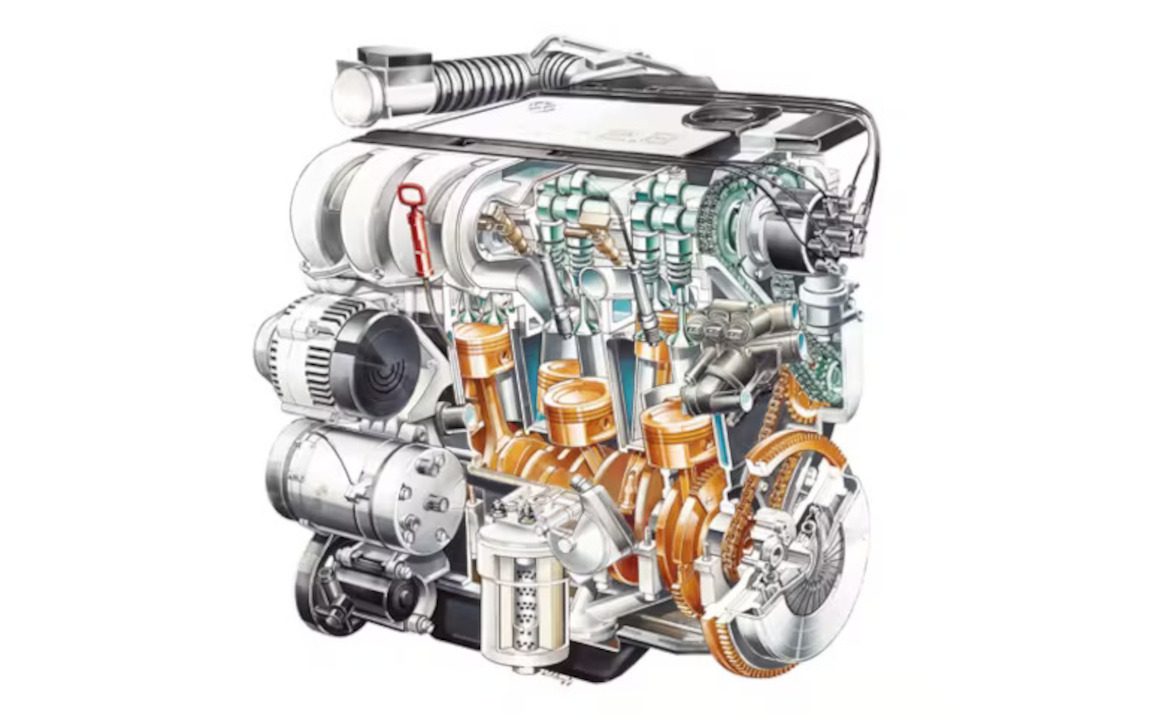
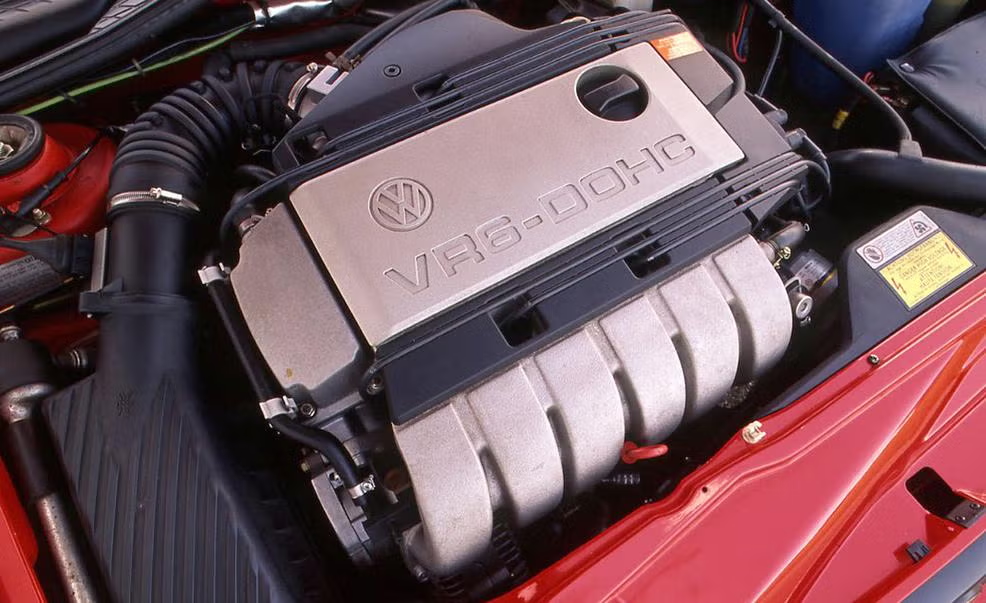
The Timing Chain Detail That Matters to Every Buyer
Early AAA engines up through production number AAA 0217000 used a double-row upper timing chain. From AAA 0217001 onward — including all AFP and later BDF-era engines — VW moved to a single-row upper chain. This is not trivia. The double-row early engines are generally considered more robust; the single-row setup requires closer monitoring and more diligent tensioner inspection.
2.9L ABV — The Performance Variant
The 2.9-liter ABV pushed displacement to 2,861 cc by increasing bore to 82.0 mm, raising output to 140 kW (188 hp). It got sharper camshaft profiles, a freer-flowing 63 mm catalytic converter, a 4-bar fuel pressure regulator, and an enlarged intake arrangement. The ABV Corrado was the version that proved the VR6 had real performance headroom from the start.
2000 — 2008The 24-Valve Redesign & The R32 Era
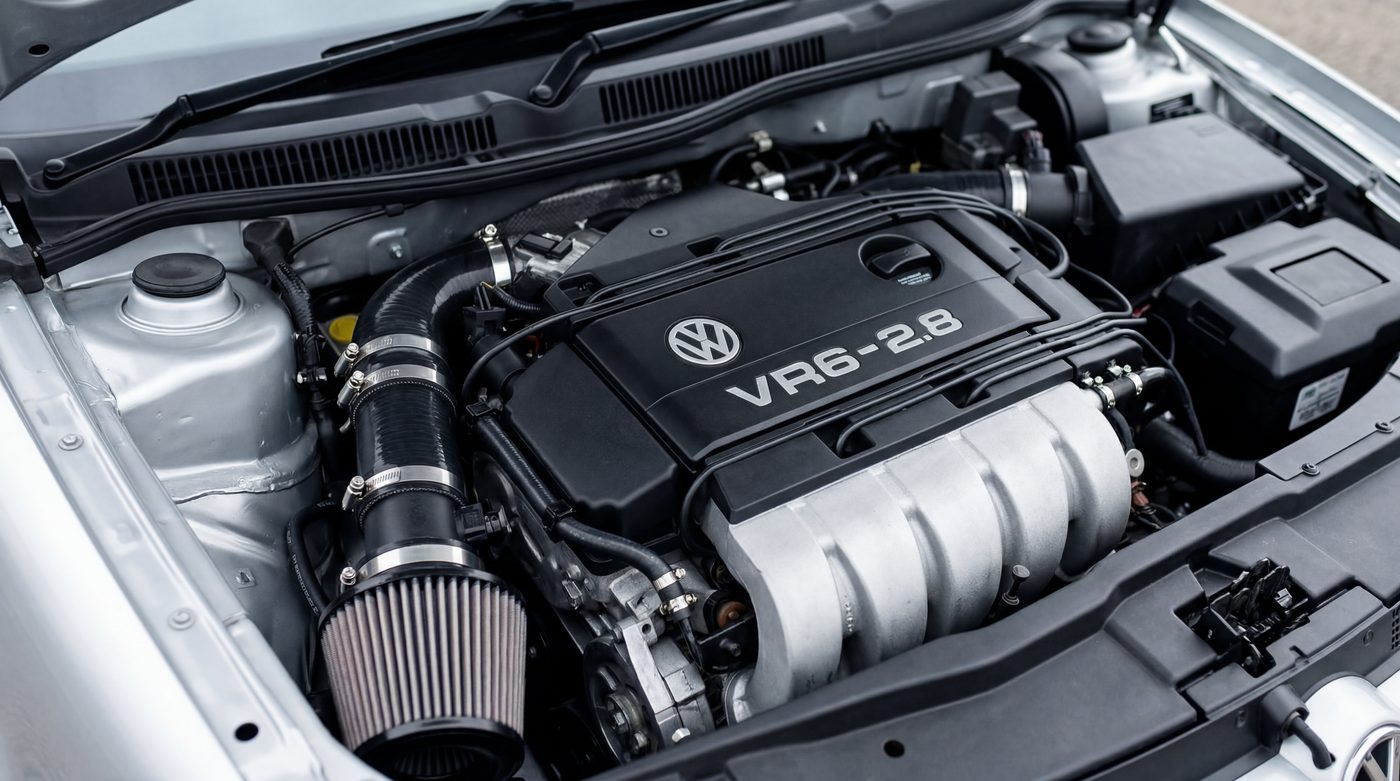
In 2000, Volkswagen gave the VR6 its most important valvetrain redesign. On the 12-valve engines, each cam worked both intake and exhaust valves for its bank. On the 24-valve version, the front camshaft operated all intake valves and the rear operated all exhaust valves — a true DOHC arrangement that brought the breathing the engine deserved. The common 2.8-liter 24V variants — AQP, AUE, BDE, BDF — made roughly 150 kW (204 hp).
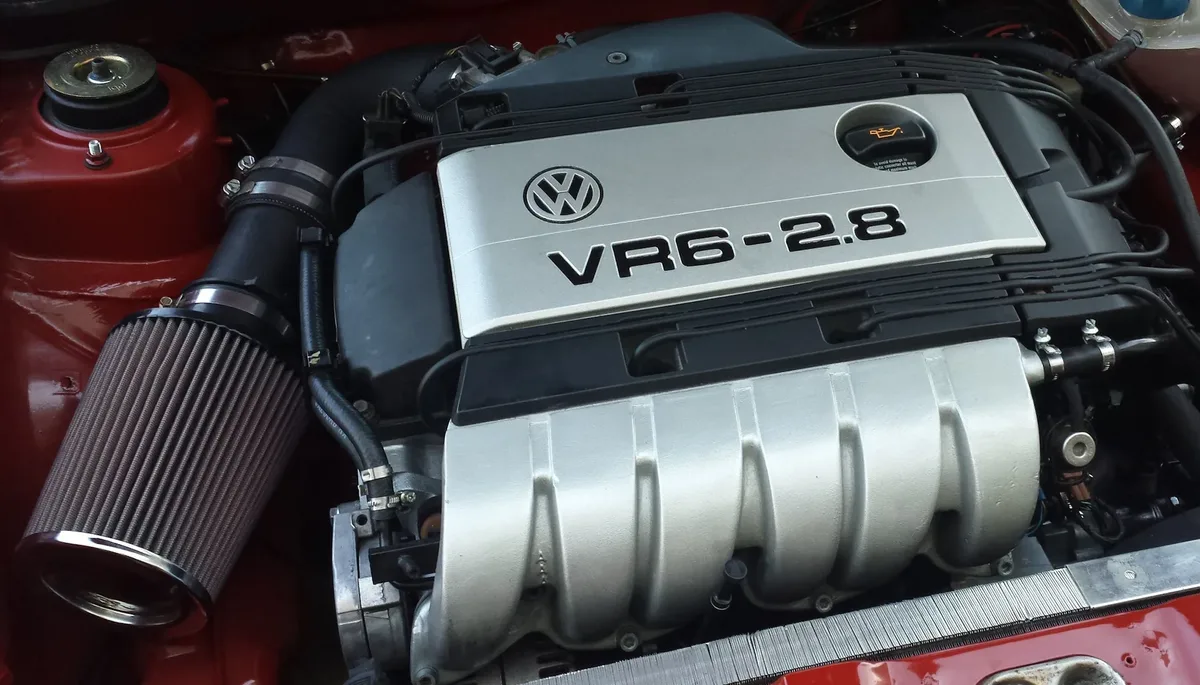
The 24-valve redesign (2000) moved from per-bank SOHC-style cam operation to a true DOHC layout — all intake on one cam, all exhaust on the other.
Golf Mk4 R32 — BFH/BJS (2002–2004)
Then Volkswagen put the 3.2-liter 24V engine where it really mattered. The Mk4 Golf R32 paired engine codes BFH and BJS delivering 177 kW (237 hp) with the 02M six-speed manual transmission and Haldex-clutch all-wheel drive.
The reason the Mk4 R32 mattered was not just the number. No turbocharger masking the throttle response, no waiting for boost. Just a naturally aspirated 3.2-liter six pulling cleanly from idle to a 6,250 RPM redline with a sound that made the car feel exotic in a segment full of boosted fours. It understeered on entry like every front-heavy FWD-based car, but on exit, the rear axle hooked and pulled.
3.2L 24V VR6 — Mk4 R32 Specifications
BFH / BJSAudi TT 3.2 quattro — BHE (2003–2010)
Audi extracted the most factory power from the 3.2L VR6. In TT (8N) trim, the BHE produced 184 kW (247 hp) — 10 hp more than the Golf R32 — through revised intake and exhaust tuning. The engine also appeared in the Audi A3 8P 3.2 quattro (codes BDB/BMJ/BUB) for the US market from 2003 to 2009.
The HPA Motorsports Factor
British Columbia-based HPA Motorsports began with twin-turbo kits on the 2.8L 12V and 3.2L 24V platforms, building 44 GT6 twin-turbo Beetles before graduating to the R32. Their Stage II R32 won Best in Show at SEMA in 2004, appeared in the Gran Turismo franchise, and prompted VW's own CEO — Dr. Wolfgang Bernhard — to fly to Texas for a closed-highway ride-along that hit 180 mph. Impressed, Bernhard commissioned HPA to build three twin-turbo VR6 vehicles for Volkswagen's inaugural SEMA appearance. The R32 era is why the VR6 still occupies such a massive place in VW performance culture.
The VR6 sound. Nothing else sounds like this. Nothing else ever will.
2005 — 2024The 3.6L FSI: The Big Technical Shift
The third major phase narrowed the bank angle from 15° to 10.6°, making the engine even more compact. Direct fuel injection (FSI) replaced port injection. This was not just an update — it was a full reengineering.
3.6L FSI VR6 Architecture
EA390 FamilyThe peak naturally aspirated output was the BWS code at 220 kW (295 hp), fitted to the Passat R36 and CC 3.6 4Motion. The R36 — a 295 hp all-wheel-drive wagon with a DSG and zero visual drama — became an instant sleeper classic.
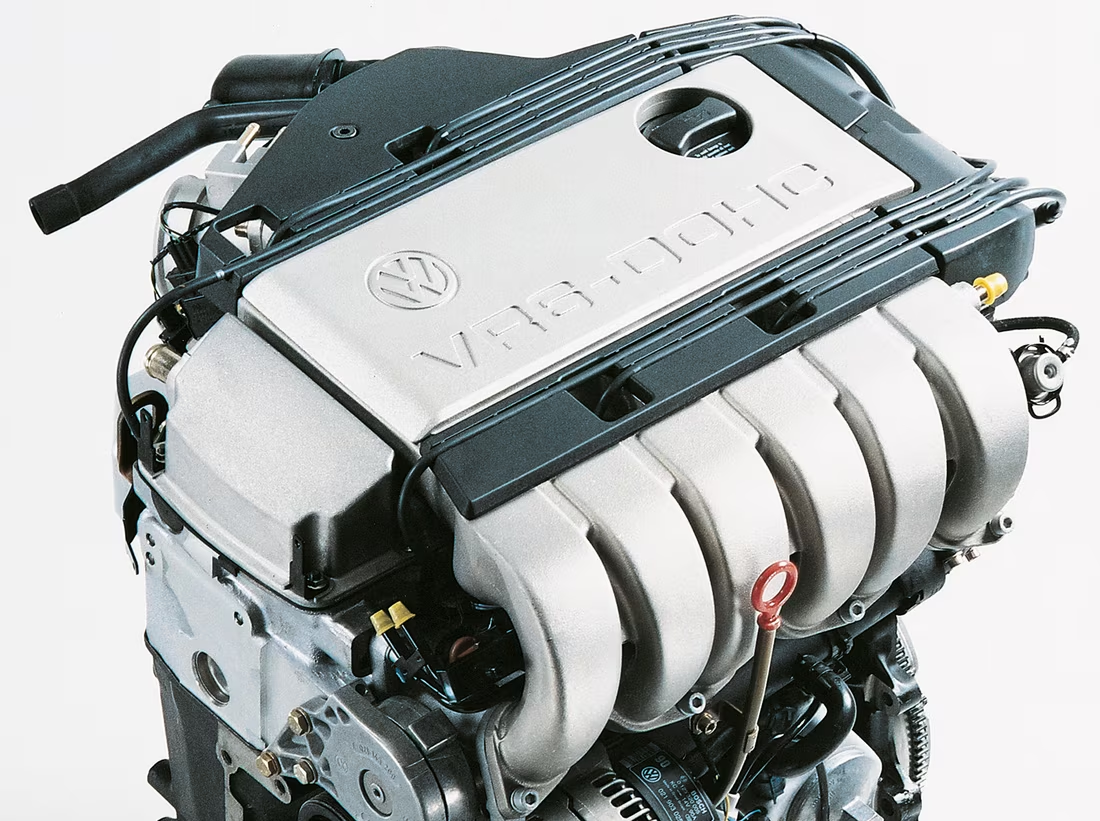
The 3.6L FSI introduced 10.6° bank angle, direct injection, and roller finger cam followers — the most technically modern form of the VR6.
The Porsche Cayenne
The base-model Porsche Cayenne (9PA) used the 3.2L VR6 from 2003 to 2006, then the 3.6L FSI from 2008 to 2018, with compression ratios as high as 12.3:1. A Porsche-badged VR6. Further proof that the VR6's compact packaging and capability were genuinely unmatched.
2017 — 2024The Chinese 2.5T: A Final Brilliant Twist
Rather than die quietly when emissions rules pushed Western markets toward turbocharged fours, the VR6 survived in China in turbocharged 2.5-liter form — and it was arguably the most technically interesting version ever built. China's excise tax code penalizes engines over 3.0 liters. Rather than abandon the market, Volkswagen engineered an entirely new variant. Built in Salzgitter, Germany and shipped to Shanghai for installation.
DDKA / DPKA — 2.5L Turbo VR6
China Market · 2017–2024That torque figure tells the story: 500 Nm from 2.5 liters — 111 lb-ft more than the NA 3.6L VR6 ever produced. Even at the end, the VR6 was still evolving in ways most people never noticed.
HPA Motorsports VR550T: Refusing to Let It Die
When VW wound down 2.5T production, HPA Motorsports acquired a supply of DDKA long blocks directly from Volkswagen. Their VR550T program drops the 2.5T into the Mk7.5 Golf R chassis, tuned to 550 hp and 550 lb-ft with OEM-like drivability. 50 serialized units at $40,000 turn-key. The VR6, in its final form, refusing to die quietly.
The W-Engine Legacy: VR6 DNA at Scale
The VR6's importance goes beyond the vehicles it powered directly. Its narrow-angle architecture became the foundational building block for the most ambitious engine programs in VW Group history.
- W12 — Two VR6 engines joined at 72° on a common crankshaft. Powered the Phaeton, Audi A8, Bentley Continental GT, and Flying Spur. Final W12 assembled July 2024 — just months before the last VR6.
- W8 — Two VR4 engines, 4.0-liter, 275 hp, exclusively in the Passat W8 (2001–2004). The most overengineered Passat ever conceived.
- W16 — Two VR8 engines at 90°, 8.0-liter quad-turbo, the Bugatti Veyron and Chiron. Now being retired. The VR6 spawned a Bugatti.
- VR5 — Five-cylinder cousin, introduced 1997. Golf, Bora, Passat, New Beetle. Quirky, characterful, almost completely forgotten.
Ownership Reality: Greatness Is Not the Same as Simplicity
The VR6 earned a reputation for durability — iron-block engines routinely go past 250,000 miles when maintained. But "properly maintained" is doing a lot of work in that sentence.
- Timing chains — The defining maintenance item. Engine-out service on most platforms. Double-row early AAA engines are more robust; single-row (AFP onward) requires closer monitoring.
- Ignition coils — Known weak spots across all generations. Early 3.6L FSI production was particularly prone to coil failures.
- Warm stall — A rite of passage for 12V owners. Engine dies when restarted hot. Fuel vapor lock or failing fuel pump.
- Water pumps — Budget for them.
- Cooling system complexity — The auxiliary electric coolant pump and after-run cooling cycle add complexity that simpler engines don't have.
- Crankshaft oil seals — On high-mileage 3.6L FSI engines, a common leak source.
None of this is made-up internet drama. It is part of the real ownership experience. And yet that is part of why people love them. A VR6 is not lovable because it never asks anything of its owner. It is lovable because when it is right, it feels like something more interesting than the efficient answer.
Complete VR6 Engine Code Directory
12-Valve (15° Bank Angle, Port Injection)
| Code | Displacement | Output | Primary Applications |
|---|---|---|---|
| AAA | 2.8L (2,792 cc) | 172 hp | Passat B3/B4, Corrado (NA), Golf Mk3, Jetta/Vento A3 |
| ABV | 2.9L (2,861 cc) | 188 hp | Euro Corrado, Passat Syncro. Sharper cams, larger intake |
| AFP | 2.8L (2,792 cc) | 174 hp | Mk4 Jetta/Golf 12V. Variable intake manifold |
| M104.900 | 2.8L | — | Mercedes-Benz Vito (W638) — VW-supplied, Mercedes designation |
24-Valve (15° Bank Angle, Port Injection)
| Code | Displacement | Output | Primary Applications |
|---|---|---|---|
| AQP / AUE | 2.8L | 204 hp | Golf Mk4 V6 |
| BDE / BDF | 2.8L | 204 hp | Golf/Bora V6 4Motion Mk4 |
| AXJ | 3.2L (3,189 cc) | 221 hp | New Beetle RSi — 250 units built, first 3.2L 24V |
| BFH / BJS / BML | 3.2L | 237 hp | Golf Mk4 R32 — 02M 6-speed manual, Haldex AWD |
| BHE | 3.2L | 247 hp | Audi TT 3.2 quattro (8N) |
| BDB / BMJ / BUB | 3.2L | 247 hp | Audi A3 8P 3.2 quattro, Golf Mk5 R32 |
3.6L FSI (10.6° Bank Angle, Direct Injection)
| Code | Displacement | Output | Primary Applications |
|---|---|---|---|
| AXZ | 3.2L (3,189 cc) | 247 hp | Passat B6 3.2 FSI (transitional, 10.6° arch) |
| BHK / BHL | 3.6L (3,597 cc) | 280 hp | Audi Q7, Touareg. BHL = manual trans pairing |
| BLV | 3.6L | 276 hp | Passat B6 (NA/Middle East). Forged 95.9 mm crank |
| BWS | 3.6L | 295 hp | Passat R36, VW CC. Peak NA output. Cast 96.5 mm crank |
| CDVA | 3.6L | 260 hp | Škoda Superb 4×4, Eos 3.6. 11.4:1 compression |
| CDVB / CDVC | 3.6L | 276 hp | Passat NMS, Atlas (North America) |
| CGRA / CMTA | 3.6L | 276 hp | Touareg |
| CHNA / CMVA | 3.6L | 276 hp | Phaeton |
| CNNA | 3.6L | 295 hp | CC (NA, Russia, Middle East) |
2.5L Turbo (10.6° Bank Angle, China Market Only)
| Code | Displacement | Output | Primary Applications |
|---|---|---|---|
| DDKA | 2.5L (2,492 cc) | 295 hp / 369 lb-ft | Teramont, Talagon. Aluminum block. China 5 emissions |
| DPKA | 2.5L (2,492 cc) | 295 hp / 369 lb-ft | Teramont, Talagon. Dual injection (port + direct). China 6b |
Why the VR6 Still Matters
Volkswagen did not kill the VR6 because it was a bad engine. It killed it because the world that created it no longer exists. Today's turbocharged four-cylinders are lighter, cheaper, and easier to certify. There is no longer a business case for a bespoke six-cylinder. That does not make it less special. It just makes it easier to justify to accountants.
"1,870,000 engines. 34 years. One cylinder head. The production line is cold. The VR6 is not."
The VR6 had technical originality. It had a sound nobody else had. It powered some of the brand's most beloved enthusiast cars. It welcomed modification and supported forced induction builds from 350 to 700 horsepower. It had enough factory legitimacy to be respected and enough mechanical weirdness to be remembered.
Most engines are either good appliances or romantic disasters. The VR6 managed to be neither. It was a genuinely smart piece of engineering that also happened to have soul. Volkswagen may be done building it. That does not change what it was.
- Volkswagen AG Technical Documentation
- ETKA Electronic Parts Catalogue
- VAG Self-Study Programmes (SSP 88, 150, 349)
- VAG Workshop Service Manuals
- HPA Motorsports Technical Bulletins
- VCDS / Ross-Tech Engine Code Database
- Volkswagen AG Press Releases 1991–2024
- Audi AG Technical Documentation
- VWVortex Engine Code Archive
- TDIClub.com Technical Archives
Go Deeper on the VR6
Detailed specifications, common failure points, modification data, and camshaft specs for every VR6 generation.
12V VR6 Reference 24V VR6 Reference R32 3.2L Reference